
4 Ways to Connect with Kids in Kidmin

An essential part of kidmin is connecting with kids. I’ve written a lot about connecting with parents and even more about volunteers but never connecting with kids. I guess it’s because it’s intuitive for me and for many of the leaders I interact with regularly. But now that I work with mainly adults, I see that not every adult connects as easily as I do.
So, here are 4 things I do to connect with kids every time I’m with them. Some are for the first-time guest, while others are for the ones you’ve known for years. Overall, this connection shows you love the kids without saying it. And connecting with them makes your service much more successful because you’re a trusted adult who they know cares for them.
1. Say their names
The most important thing for a kid is their name. It’s one of the first things they learn in their lives. It’s usually the first thing we share when we meet someone. And nothing hurts quite like someone getting your name wrong. And that goes even more for kids.
So, say their names.
A first-time guest makes their decision to stay in the first 15 minutes of arriving. If someone knows their name they’re going to feel connected and much more likely to return. In kids, we have a little cheat code. Name tags. Because I print name tags as part of my security procedures, every kid has their name right on their shirt, giving me easy access to this vital piece of information.
One time, I impressed a second-time visitor because I said their name. Little did they realize I read it off their tag!
Learning your kids’ names is vital to your ministry and connecting with them. There are a lot of strategies out there to get better. But overall, it is a skill to be developed. With this in mind, I use two main strategies. One, I say their name repeatedly in conversation. Sometimes I’m weird about it by saying their name after literally every sentence, just to make a joke. Other times I find ways to call out their name.
The second strategy I use is to look at their names in writing and then visualize their face in my mind. If they have a defining physical feature, that helps a lot. Then on the way to church the following week, I’ll run through new kids’ faces in my mind and attach the names. It’s not a perfect system, but it works nine times out of ten.
2. Play games
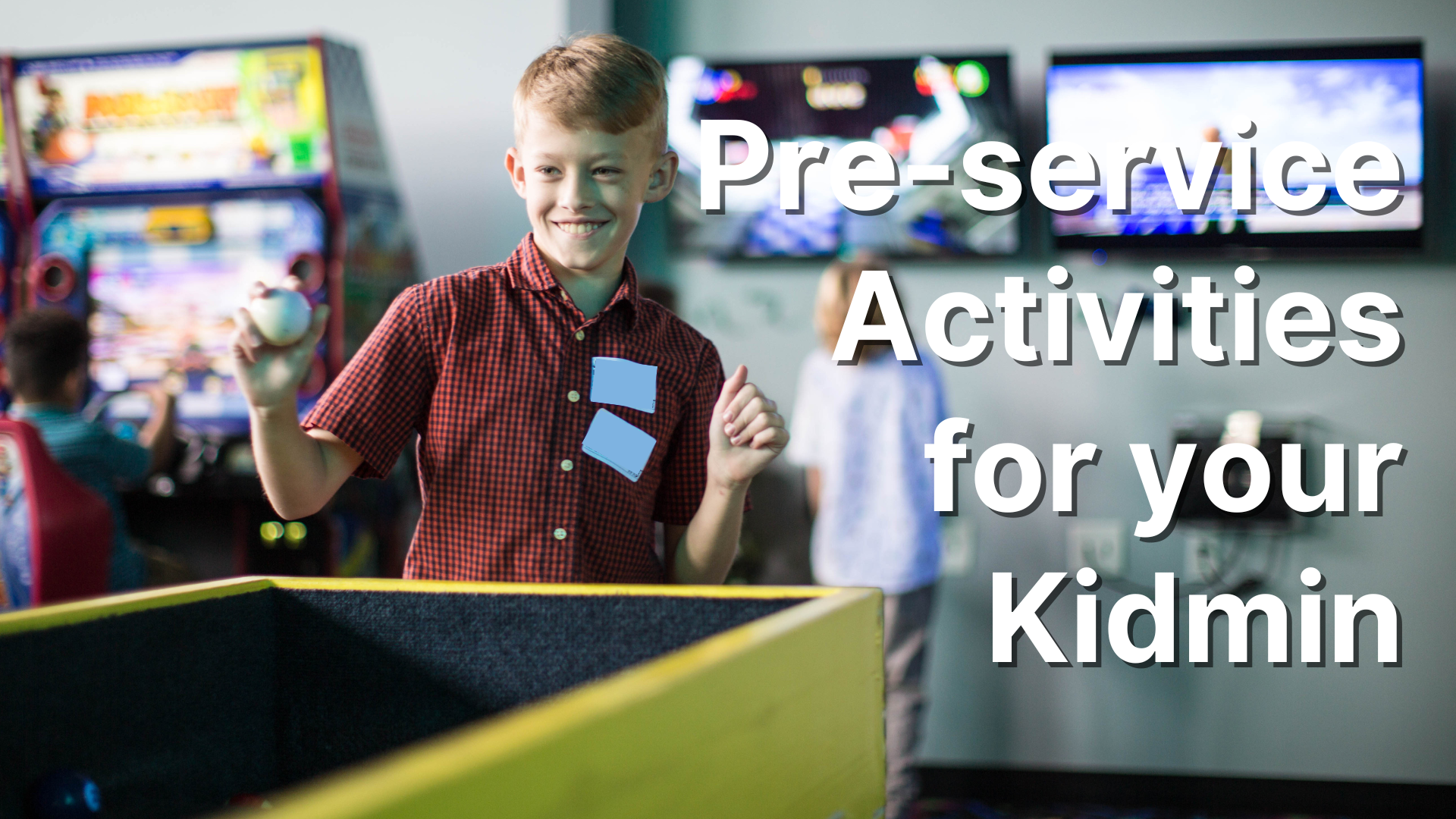
A kid’s work is play. And if you play with kids, it shows you truly like them. So, if you have time between prepping for service and your pre-service meeting, spend some time playing with your kids. This is where your pre-service activities come in handy. If you can hop into a game of carpet ball, build some Lego, or just comment on the foosball game, not only will you connect with those kids, but the others around will see you playing too.
Many adults like to stand in the corner and watch. I do it too from time to time. But if you can jump into a game and play around, even if you’re bad at it, the kids will love it. It’s even better when the kids ask you to play along. That means they trust you and are inviting you into their world.
When I didn’t have games for kids to play and used videos instead, I commented on the videos and asked kids what they thought. If it was a game, I picked a winner and asked the kids which one they thought would win. Then I’d cheer like crazy for mine. Again, silly goes a long way. We can’t always be serious. Sometimes you just have to have fun.
3. Get on their level
I mean this two ways. One, literally get down on one knee so you’re eye to eye with them, and two, teach on their level. Kids are not impressed by your large vocabulary or how much you know. They already expect you to know more than them. You’re an adult. So, use smaller words. Don’t feel like you have to do a deep dive into theology. They’re seven. They don’t need to know the Christological significance of Isaiah 59.
You should absolutely point them to Christ, but you don’t need to go deep. To use a math analogy, they’re learning how to add and subtract. You don’t need to show them how to take the square root. They’ll get there, but it’s not time yet.
I learned how to do this while earning my education degree. If you don’t have that background, I’m sure there are teachers in your church who can help you tailor your lessons.
This is also why I strongly advocate using a curriculum. Many of the writers keep kids’ developmental level in mind when they create the lessons. You can trust that it won’t go over (or under) the kids’ heads. You know your kids best, so you may need to adjust to hit them spot on, but the curriculum gives you a head start. All of this is meeting them where they are, the same as kneeling down to get on their level.
4. Create an inside joke
I usually only do this with the kids I really know. It can be a nickname, a fun noise, or just an action that you only do with this one kid. For one kid, we’d fist bump while doing a thumbs up. Then we’d touch thumbs, and I’d act like I got an electric shock. They’d giggle and I’d smile, and then we’d move on.
Since I was a kid, I always thought it was funny to say a person’s name backwards. So, one kid named Micah, I called Hacim (Hakim). It was a term of endearment and a little chuckle between the two of us. And he wasn’t the only one. I had little nicknames for many of my kids’ lead team.
For me, these develop organically. So, if this isn’t your thing, don’t force it. It would be like the scene from that old movie Liar, Liar. Jim Carrey’s character has “The Claw” joke with his son. Then the prospective stepdad (Cary Elwes) tries the same joke, and it falls flat. He tried to force it. An inside joke will come as a natural development of your relationship with the kid.
Connecting with your kids is vital to your success as a kids leader. Do what works for you and give these a shot. It shows you love them. It shows you care for them. It shows that you understand them. And once that connection is made, it will be far easier to disciple them and connect them to Jesus.







In kidmin, there is a lot of help out there for Sunday mornings and events. But there is one recurring event that churches all over the country deal with that seems to be silent.
Midweek.