
Leading Change Without Losing Your Team

Leadership is hard and leading change is even harder. But it’s an essential part of the job. Every year I look back on the last and ask what could we do differently? What’s working? What’s not? And how can I make what I’m doing better? And set goals for the next year. With those goals inevitably comes changes.
But with change comes conflict. People love change until it affects them. Part of the leader’s job is pushing people to make the changes they need. But it’s a delicate balance of how much to push. Push too hard and you become an evil dictator and while things may get done, you lose respect from those you lead. Push too little and you become a push-over yourself. Nothing ever gets done except what’s been done before. And again you lose the respect of your people.
But not all people are the same. Some will be all for your change. Others will be staunchly against it. And a whole bunch will be somewhere in between. The key for the leader is to bring as many people along as possible. But rest in the knowledge that there will be some people who will never agree. And that’s ok.
So how do you push for necessary change without losing the respect of the people you lead? Read on.
1. Get your leaders on board
Before you implement any change, you need to get buy-in from those you lead. You don’t want to come in and announce a sweeping change in front of everyone. That sets you up for failure. Rather, go to your highest leaders, your most influential people, or your most bought in volunteers and talk to them about the change.
You may have been thinking about the change for weeks or months. You’ve had time to process and see all the little details. Your leaders need time to do the same. So, talk to them early, privately, or in a small group. Let them ask questions. Let them push against the idea. Give them time to think and come back to you. You don’t have to do what they say, but at least they get a voice in the decision.
After you talk to them, expand the circle little by little until you make the big announcement. By then most of your leaders and volunteers will already know about the change. They can help defend against naysayers.
One leadership truth is the further you get from the front lines, the further away the truth is. People will go to other leaders in your ministry long before they come to you with their objections. It’s best to have those leaders on your side.
Before you make the big announcement to everyone, make sure all your leaders are on board. Then ask them to help you spread the word. They’re going to be your biggest supporters when things get tough.
2. The undecideds
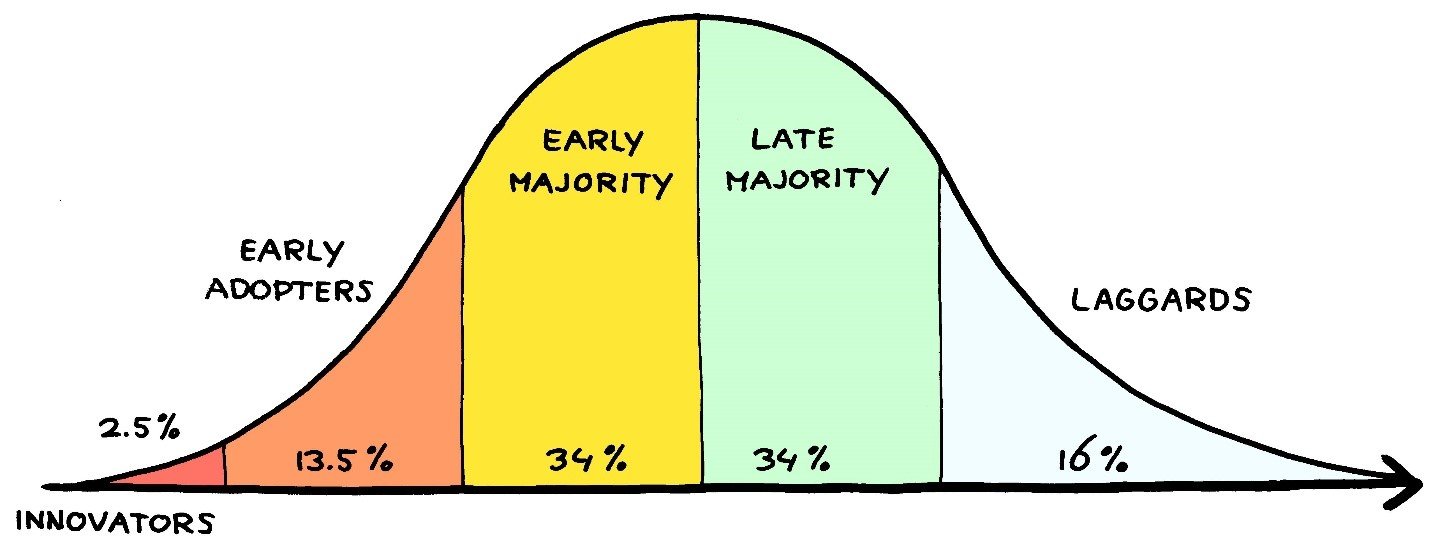
You can put people’s adoption of change on a bell curve shown above On the left side are people on the cutting edge of the change and are all for whatever you say. Those are the people I talked about in the previous section.
On the far right side are people who still don’t have a smart phone. They’re never going to adapt to the change. I’ll talk about them in the next section.
68% of the people will fall into this middle category. The undecided. These people will be cautiously optimistic or cautiously cynical depending on where they fall on the curve.
After you make the big announcement, your work is not done. In fact, it’s just starting. Depending on how big the change is, you may have to meet with them personally, answer their questions, and counter their objections. Some of them still won’t be all in until after the launch. They love to wait and see before they throw in their support.
So, I suggest, after you implement a change, hold your ground for 6 months. You will face opposition. But if you cave at the first sign of trouble, you’re not leading, you’re responding. Ride the wave of change as the people you lead get used to the idea.
If after 6 months those changes clearly weren’t the right thing, then apologize and try something else. But most likely the biggest objections will be silenced. You can move on. Bottom line is people will vote with their feet. If they like it, it will be well attended. If not… well it’s back to the drawing board.
3. The Never Adopters
There are some people who will be against the change no matter how successful or how many people are for the change. These people were the last to get a smart phone. They may still bemoan the lack of hymns in the worship service. They think the 70s were 20 years ago not 50. (As an elder millennial, I’m in this camp. We can’t win them all)
It’s easy to think these people are in the majority because they are the most vocal. But rest assured they’re not. They like to come with sweeping statements and say everyone hates this! Or Many people don’t like this. Or I’ve spoken with several people who think this is a bad idea.
The best counter to these statements is to ask “who?” Who are these people you’ve spoken to? Most likely they’ve spoken to about 2 people. And one of them is probably their spouse. But they won’t admit that. They’ll backtrack and say they’re protecting other people’s privacy.
But you’re the leader. You need to know who they are. You need to know who’s not for it, so you can speak to them directly. So, ask for their names. If they can’t produce the names, most likely the person is just making a lot of noise.
It’s natural for people to think that their experience is everyone’s experience. But nothing could be further from the truth. There are patterns, but everyone comes from a different angle, a different perspective. So, counter the naysayers with data. Talk about why you’re doing it. Talk about the success you’re seeing. Talk about the people who are enjoying the change.
Eventually, you’ll have to ignore it. You don’t want to spend 90% of your time with 2% of the troublemakers. Rather, spend your time with the people who make you and your ministry better.
Leadership is hard and leading change is even harder. But it’s part of the job. Get your most influential people on board early. Cast vision, answer questions, push against objections. After 6 months, most if not all, will calm down. And you can rest in the success of your change, making your ministry and ultimately your Gospel effectiveness better.











I have a kidmin secret and it’s bigger than I hate crafts (link). I hate productions. Rather, I hate leading them. Even with this deficiency and being very vocal about it with my leaders and parents, I still got asked (more like told) to do it.