
3 Ways to Survive VBS Without Burning Out
Over the last few weeks I've seen a lot of people expressing frustration about VBS. Specifically, they feel like the rest of the staff isn't supporting them, and many are on the verge of burnout.
I get it. I spent many summers working 70-hour weeks back to back just to pull off this one event. As much as I love VBS, it puts a serious strain on your time, resources, and volunteers. That's why keeping your priorities straight during this season matters so much. I talk about how to do that here.
But there are things you can do to keep from hitting the wall before VBS even starts. I've learned these through years of trial and error. Even with these strategies, VBS is a lot. But it becomes more sustainable year after year once you have the right systems behind you.
1. Recruit Volunteers to Help from the Beginning
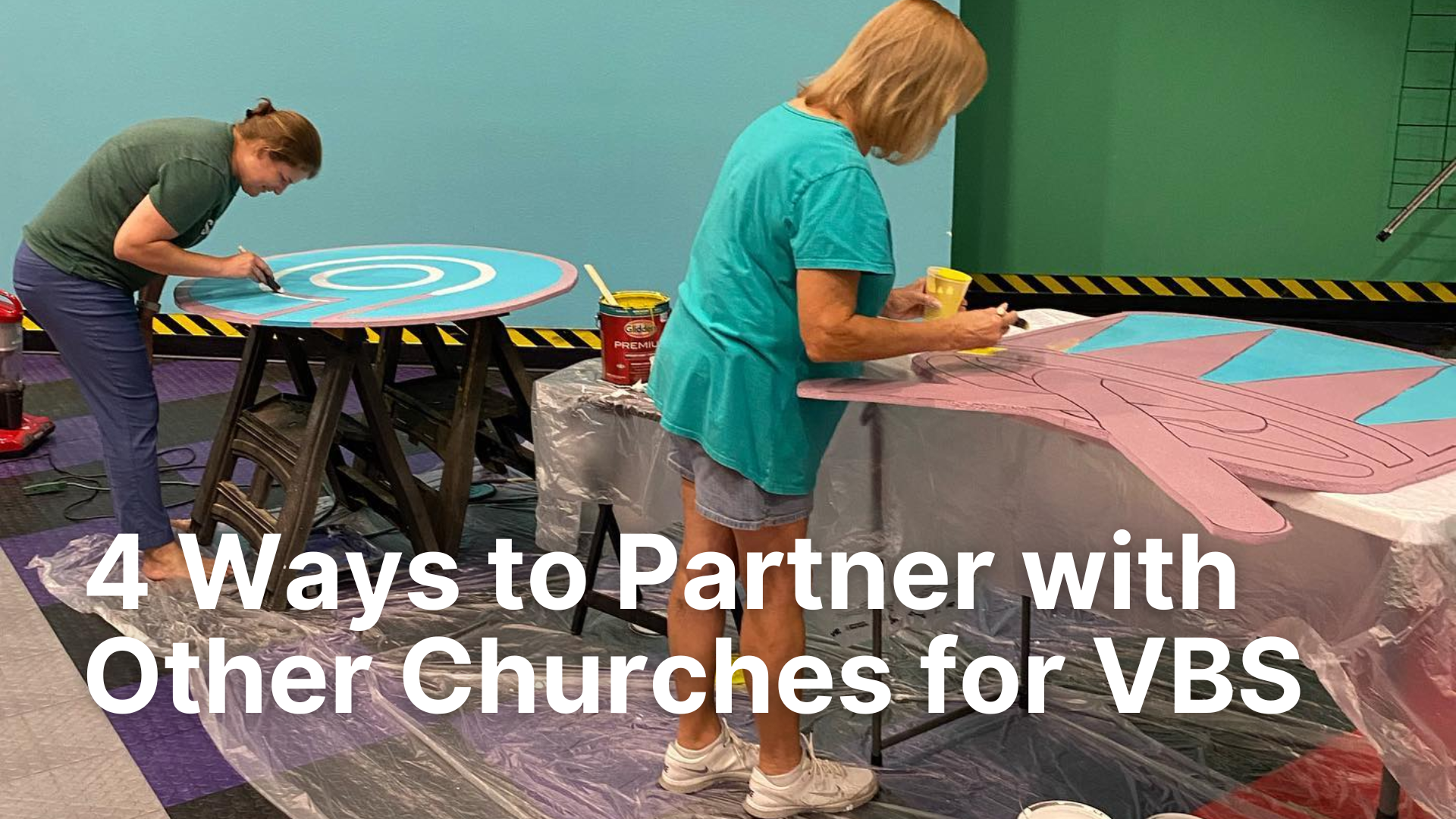
My first few years of VBS, I made announcements about decorating, scheduled work nights, and begged people to show up. Many of those nights, especially that first year, it was just me and my wife painting foam board until midnight. That same foam board ended up in the trash two weeks later.
Everything changed when I made one small adjustment: I started requiring my volunteers to help with work weeks.
Here's how it works. I schedule two work weeks before VBS. One falls about six weeks out and the other lands the week before. I call them work weeks, but they're really Monday, Tuesday, and Thursday. Wednesday is church night, and nobody shows up on Friday. I also add a workday on the Saturday before launch to get everything into place. That's seven days spread across six weeks to get everything ready.
When I go over required dates at volunteer training meetings, I list both the VBS dates and the workdays. Volunteers are required to attend all of VBS and get to choose two workdays. I typically hold three training meetings in that six-week window, with the first one always falling on the Sunday before the first work night. You can read more about how I run those meetings here.
This gives volunteers a real opportunity to contribute while still giving them some flexibility in when they show up. I still make announcements and post progress on social media, but I've never had a lonely work night since. I always have at least two to five people showing up to help.
As a bonus, since the first work week is six weeks out, several of my more crafty and committed volunteers will come back on their own in the weeks between to finish the projects they started. By the time the final work week arrives, I'm far less stressed because the bulk of the decorating is already done.
2. Know What to Expect from Your Staff
Another major source of frustration is feeling unsupported by the rest of the staff. I know this feeling all too well.
At one church, VBS was an all-hands-on-deck event. Every staff member had a role and showed up ready to help make the week great. At my next church, VBS was viewed as a kids-only event. Most of the staff looked at me like I was crazy for even suggesting they pitch in.
Part of that is the challenge of bringing change into a new role. But a lot of it comes down to church philosophy. If your senior pastor views VBS as a kids' ministry event, don't expect other staff members to rally around it. They have their own responsibilities. You can certainly ask them, but if the direction doesn't come from the top, the answer will likely be no. It just is what it is.
However, if your church is all-in and your pastor voluntells the staff to help, be prepared to use them well. Don't put them in the back doing crowd control. That wastes their time and their talents. Your fellow staff members bring real professional skills to the table, and you can put those to work.
Before you ask anyone to help, know exactly what you're asking them to do. Your worship pastor can lead music. Your youth pastor can recruit and manage teens throughout the week. Your communications person can photograph the event and tell the story as it unfolds. At one church, our admin pastor was exceptionally creative, so I put him in charge of the Bible story station. It became the best rotation we had, with kids coming to our VBS specifically for his station.
Your church may not have all of those roles, but the principle holds. Come with a clear ask. And when someone says no, don't take it personally. They have full lives too. Take whatever help you can get, express genuine appreciation, and move on.
3. Decorate with Big Set Pieces, Not Everything
For years I used Group VBS. It's a solid curriculum, and they run quality events all over the country. My biggest frustration was always their decorating vision. That's a large part of why I had so many work days in the first place. Their promotional videos suggest it can all be done in two days. In more than ten years of doing their VBS, that happened exactly zero times.
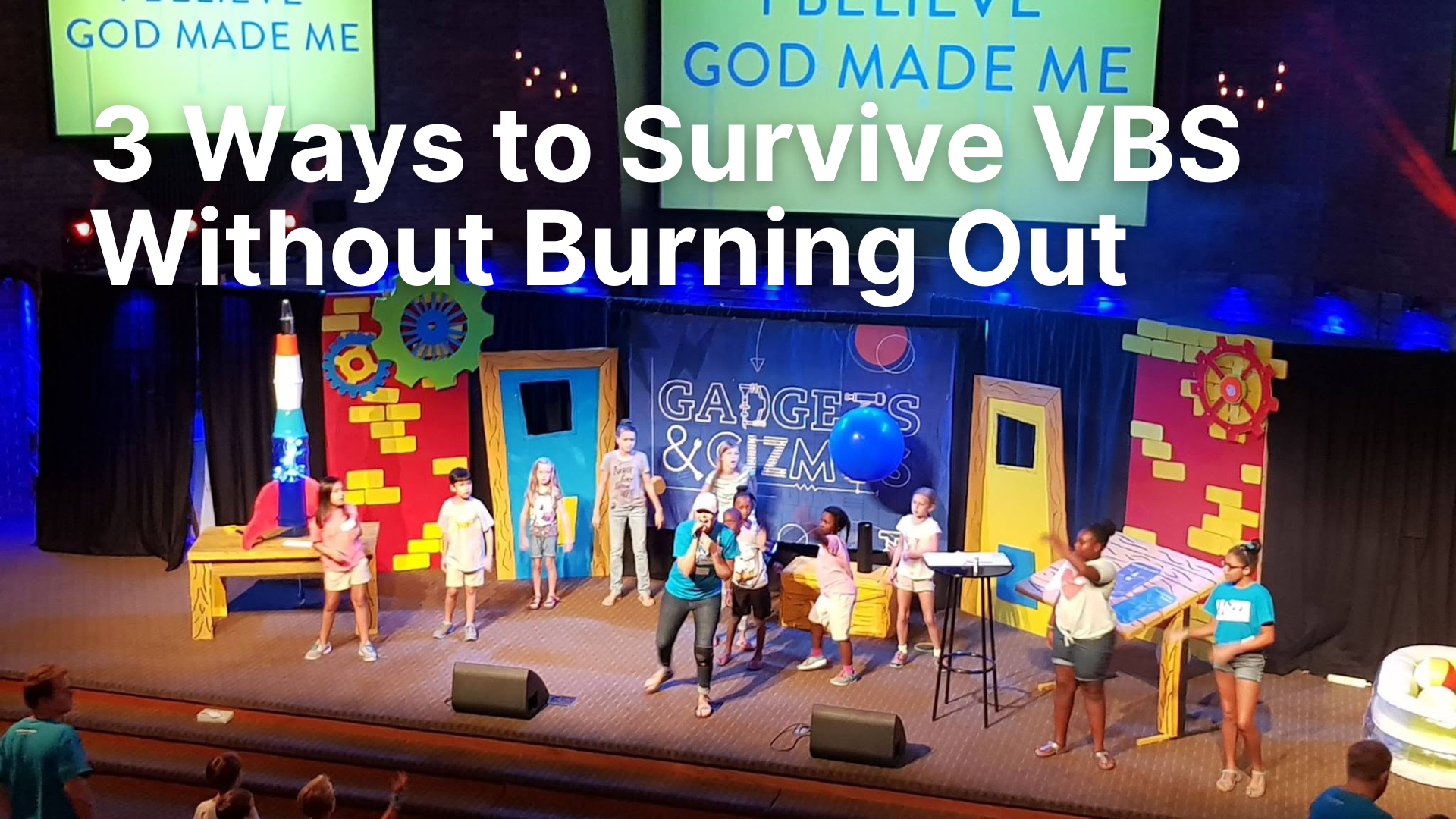
Part of the problem is that "two days of decorating" in their world means the stage only. Beyond that, there are images, videos, and ideas for heavily decorating each station and the hallways between them. I once had volunteers spend more than six hours trying to tape brown paper to a brick wall just to make it look like a cave. It's a lot of work, and as I've learned, it's largely unnecessary.
After years of Group, I made the switch to Orange VBS. Their decorating philosophy centers on a few large, high-impact set pieces on the stage and keeping everything else simple. It took me a wrap my head around it, but after the first year I understood. The stage looked incredible, it came together in a fraction of the time, and the kids were just as excited.
For the stations and hallways, we bought most of our décor from Oriental Trading. It's inexpensive, pre-made, and gets the rooms looking great without adding significant prep time.
Shifting to this approach didn't just help my budget. It gave me my time back. Instead of a 70-hour work week leading up to VBS, I was able to cancel my Tuesday and Thursday work nights because everything was already done. Instead of spending eight to twelve hours setting up on Saturday, I wrapped up in two. I walked into Monday refreshed and ready for the best week of the summer.
If VBS has you overwhelmed right now, I'm sorry. I've been there, and it's not fun. But there is a way through. Put these three strategies in place and you'll find that VBS isn't just doable. It's actually enjoyable.
Don't let the enemy fill you with bitterness because you feel like people should be helping but aren't. Focus on who is there, work with what you have, and serve with excellence. Trust God with the rest.
And when it's all over, take a vacation. You've earned it.





Over the last few weeks I've seen a lot of people expressing frustration about VBS. Specifically, they feel like the rest of the staff isn't supporting them, and many are on the verge of burnout.
I get it. I spent many summers working 70-hour weeks back to back just to pull off this one event. As much as I love VBS, it puts a serious strain on your time, resources, and volunteers.
But there are things you can do to keep from hitting the wall before VBS even starts.